Exploring Brazilian Jiu Jitsu - The Most Effective Martial Art
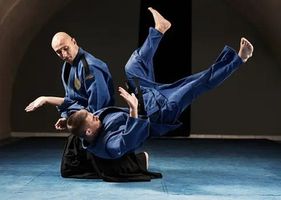
Brazilian Jiu Jitsu is a martial art and combat sport that focuses on ground fighting. It has been around since the 1920s, when it was developed by the Gracie family in Brazil. Since then, it has grown in popularity not only across Brazil but in many other countries, including in the USA. In Bergen County, New Jersey, there are many martial art academies that teach Brazilian Jiu Jitsu, including in Paramus.
Brazilian Jiu Jitsu involves training in various positions and techniques, such as applying joint-locks and chokeholds to force an opponent into submission. One of the most important aspects of Jiu Jitsu training is learning to conserve energy. Techniques that typically require more strength and speed are avoided, and often the goal is to outlast your opponent or defend against the attack with minimal energy expenditure.
Brazilian Jiu Jitsu also involves constant stand-up drills, so you learn how to transition from a standing position into a ground-fighting position quickly and efficiently. Sparring is a very important part of the training, and it allows you to practice techniques in a simulated real
When considering a martial art or self-defense system for training, Brazilian Jiu Jitsu (BJJ) is usually at the top of the list. BJJ is widely recognized for its ability to enable smaller, weaker individuals to successfully defend themselves against larger, stronger attackers.
BJJ incorporates physical and mental training, making it an effective and powerful way to defend against an attack. It involves conserving energy and using leverage and technique rather than pure strength or speed. This makes it an ideal martial art for anyone, regardless of size or strength.
BJJ also emphasizes the importance of transitioning quickly and smoothly from a standing to a ground-fighting position. This is a key component of the sport, and it enables practitioners to take down and control an attacker in a matter of seconds.
Finally, BJJ's sparring drills are a great way to practice techniques in a safe and simulated real-life situation. This teaches practitioners how to respond appropriately to an attack, as well as giving them a chance to hone their techniques and refine their skills. Overall, BJJ is a great martial art for self-defense.
As a beginner in martial arts, one can quickly get confused about all the different styles available to learn. Brazilian Jiu Jitsu, Wrestling, and Traditional Japanese Jiu Jitsu all focus on grappling techniques, but each has its distinct styles and principles.
Let's explore the differences between these three martial art styles:
Brazilian Jiu Jitsu(BJJ):
BJJ traces its roots back to the Japanese martial art of Judo but developed independently in Brazil in the 1980s. It emphasizes ground fighting and submission techniques, where practitioners aim to force opponents into submission by using chokes, joint locks, and other grappling techniques.
BJJ training comprises positional sparring and rolling (live fights) and focuses on developing strength, agility, and technique.
Wrestling:
Wrestling is a sport that has been around for thousands of years, with evidence of its practice dating back to ancient Egypt and Greece. Unlike BJJ, where the goal is to force opponents into submission, wrestling is focused on takedowns and ground control to score points. There are different wrestling styles, including freestyle, Greco-Roman, and folkstyle wrestling, and each has its set of rules and techniques. Wrestling training emphasizes explosive strength, speed, and endurance.
Traditional Japanese Jiu Jitsu:
Traditional Japanese Jiu Jitsu (JJJ), also known as classical Jiu Jitsu, has been around for centuries and is the foundation of many modern martial arts practices, including Judo and Aikido. JJJ utilizes a range of strikes and throws as well as immobilization, joint-locks, and choking techniques. Unlike BJJ, which places emphasis on ground fighting, JJJ is a standing-art that prioritizes taking the opponent to the ground to finish the fight. JJJ training also focuses on spiritual and philosophical aspects, with an emphasis on respect, discipline, and morality.
In summary, while BJJ focuses on ground fighting and submissions, Wrestling emphasizes takedowns and ground control to score points, and JJJ prioritizes standing techniques, including strikes, throws, and joint locks. Each martial art has its rules, techniques, and principles, and practitioners of each style may have different styles based on their training and learning environment.